

Rainbow Unicorn Mermaid Party
A learning adventure where every turn is a little lesson. Your child picks a hero, travels six magical lands, and helps lost babies find their mamas on the way to a birthday party. Along the way they play 21 learning games, and you get a clear picture of how they're doing.
- No ads
- No tracking
- No data collected
- Plays offline
Coming soon toGoogle Play
Free download: Mermaid Lagoon is free to play.
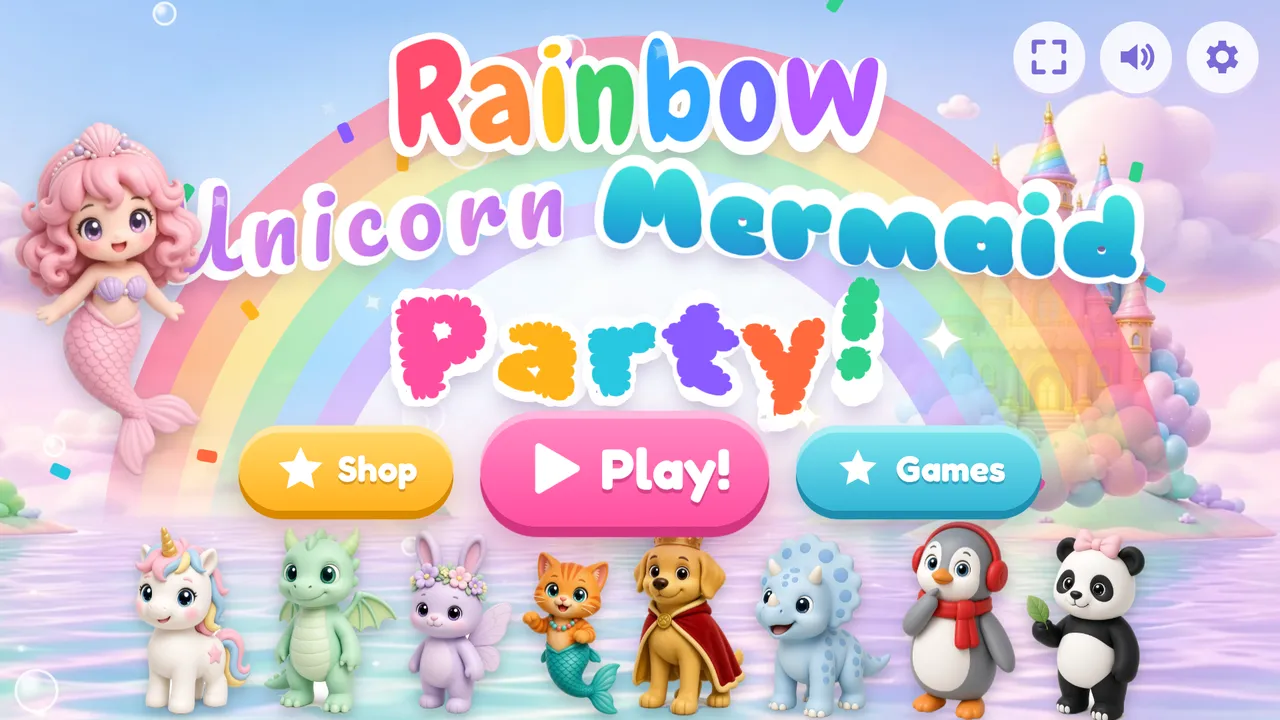
An adventure built around learning
Spin, move, and land on surprises. Game spaces open short learning games, so practice is part of the fun instead of a chore before it. Flower, the friendly mermaid host, reads every word out loud, so no reading is needed to play.
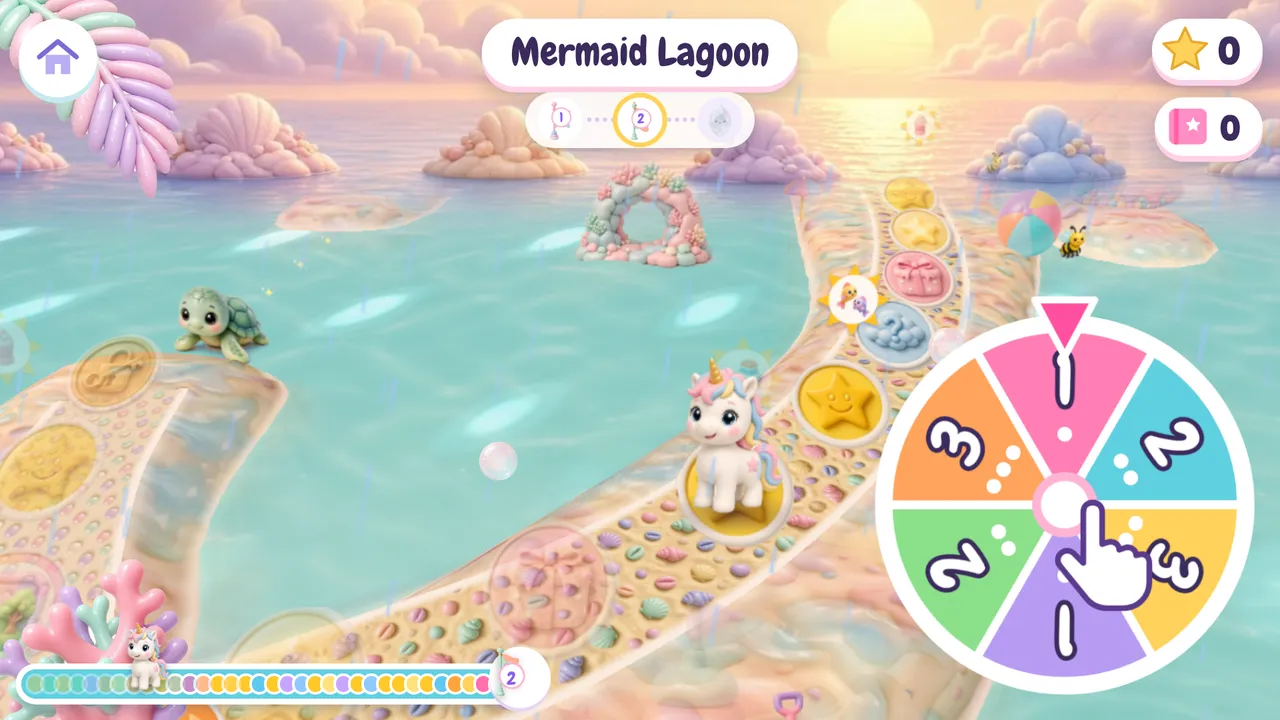
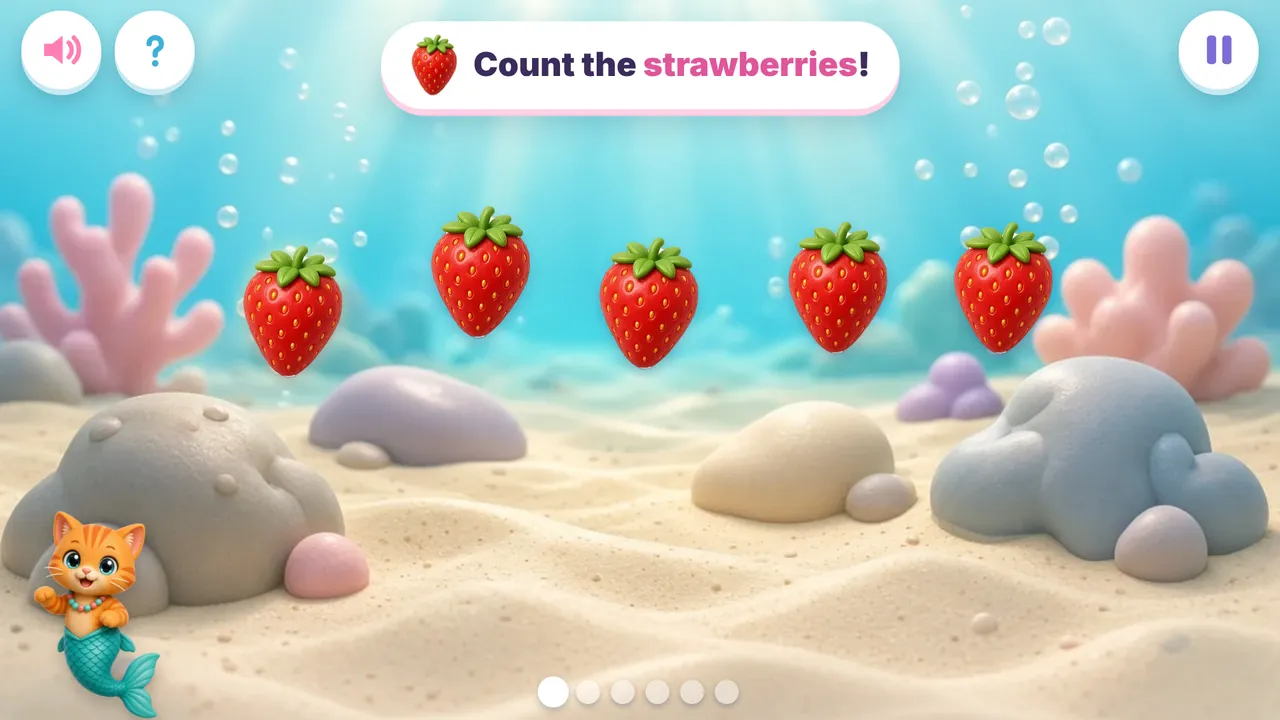
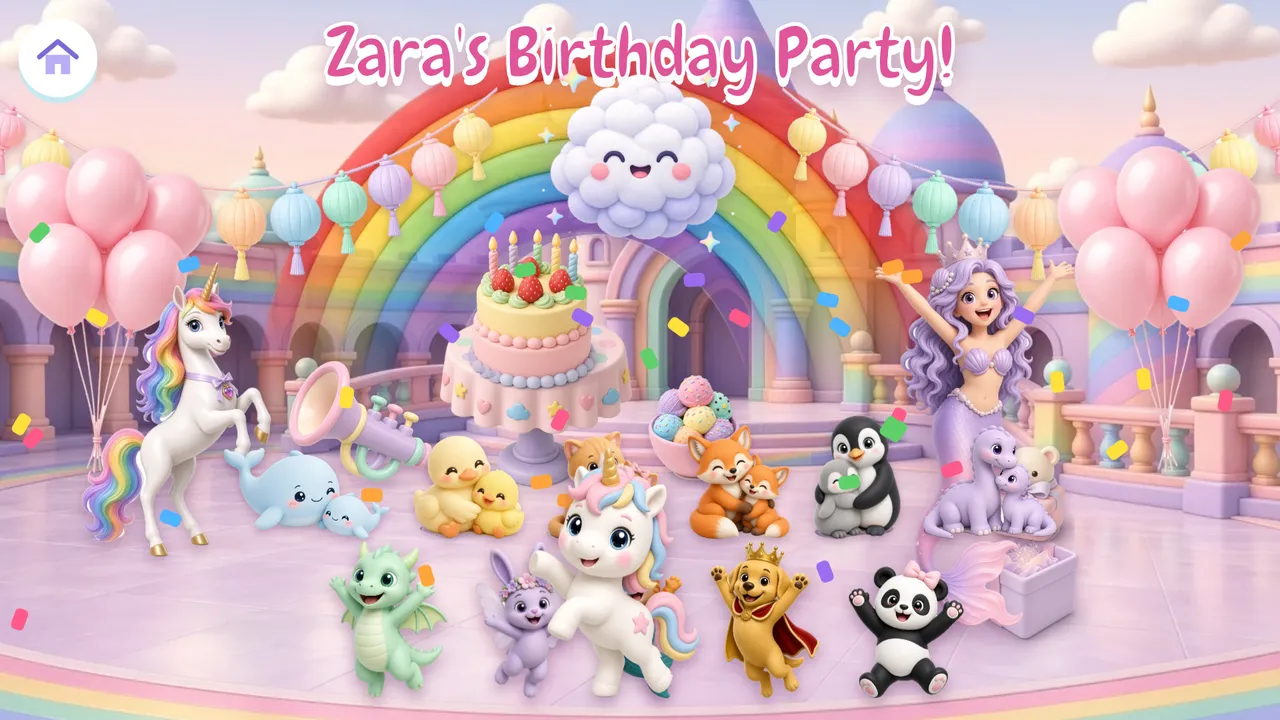
21 learning games across the early-years basics
The games cover the skills children usually build between preschool and the start of first grade. Each game grows with your child through up to seven levels, so a four-year-old and a six-year-old get different questions from the same game.
Reading and letters
- Letter sounds, and telling look-alike letters (b, d, p, q) apart
- Rhymes, clapping the beats in a word, first, last and middle sounds
- Spelling short words and reading words and short sentences
- Tracing letters and capitals with a finger, in the order schools teach
- Six storybooks where each word lights up as Flower reads it
Letter Sounds, Word Builder, Rhyme Time, Read with Me, Sparkle Trace, Storybooks
Numbers and math
- Counting to 10, then on to 20, and showing numbers on fingers
- Adding and taking away with small groups, and number bonds with ten-frames
- Shapes and their corners, patterns, sorting by one or two rules
- Bigger and smaller, longer and shorter, heavier and lighter
- The numbers on a clock, then telling the time to the hour
Count & Share, Add and Take Away, Number Friends, Finger Stars, Shape Hunt, Pattern Parade, Sort It Out, Measure Me, Tick-Tock Clock
Science and the world
- Guessing what floats and what sinks, then seeing why
- How plants, butterflies and frogs grow
- Seasons, weather and what to wear for it
- Mixing colors, and position words like under, behind and between
- How life long ago differs from today
Splash Lab, How Things Grow, Seasons and Weather, Paint Lab, Where Is It?, Long Ago and Today
My body and feelings
- Naming body parts and the five senses
- Reading feelings from a face, with little feeling stories
- Healthy habits: washing hands, sleep and eating well
Bo's Body
Made by Me: room to create
Children draw their own sea creatures and friends, and their drawings come alive and live on the game board. They can make up songs in the Shell Band and build their own storybook. Every drawing is kept in a keepsake gallery for grown-ups.
Each milestone in the parent report is matched to where it sits in published early-years standards: US Common Core (kindergarten), Head Start's Early Learning Outcomes Framework (preschool), and England's Early Years Foundation Stage. The games are designed to line up with these standards. No one has certified them.
Built on how young children actually learn
Every game shares one teaching engine. It keeps practice at the right level, brings back what was missed, and only counts something as learned when it has really stuck.
Shown before it's asked
Each new kind of question is explained once, in plain words, and the first time your child plays a game, a short "Watch me!" demo shows how it works.
Your child tries first
The game never shows the answer before your child has a go. After a miss, wrong choices fade away one by one, and a helping hand appears only after three misses, if game helpers are on.
Missed? It comes back
Anything missed returns a couple of questions later, while it is still fresh, so your child gets to finish on a win.
Just the right challenge
A slip makes the next question a little easier. A run of right answers makes it a little harder. Levels move up and down between rounds, too.
Learned means learned
Something counts as known only when it is right on the first try on at least two different days, and clearly better than guessing.
Checked again later
Known things come back after about a week, then about three weeks. If one has slipped, the games quietly bring it back. The board even favors games with skills that are due.
Hands on, not just taps
Children trace letters and numbers, hold up fingers on the screen to show a number, and drag number bubbles together to make ten.
Tricky pairs get extra care
Look-alikes such as b and d, or 6 and 9, get side-by-side practice with a simple tip for telling them apart.
Starts where your child is
Tell the game your child's age and the games start at a fitting level instead of the very beginning.
See exactly how your child is learning
Behind a simple grown-ups question is a full learning report for each child. It's written in plain sentences, worked out on the device, and never sent anywhere.
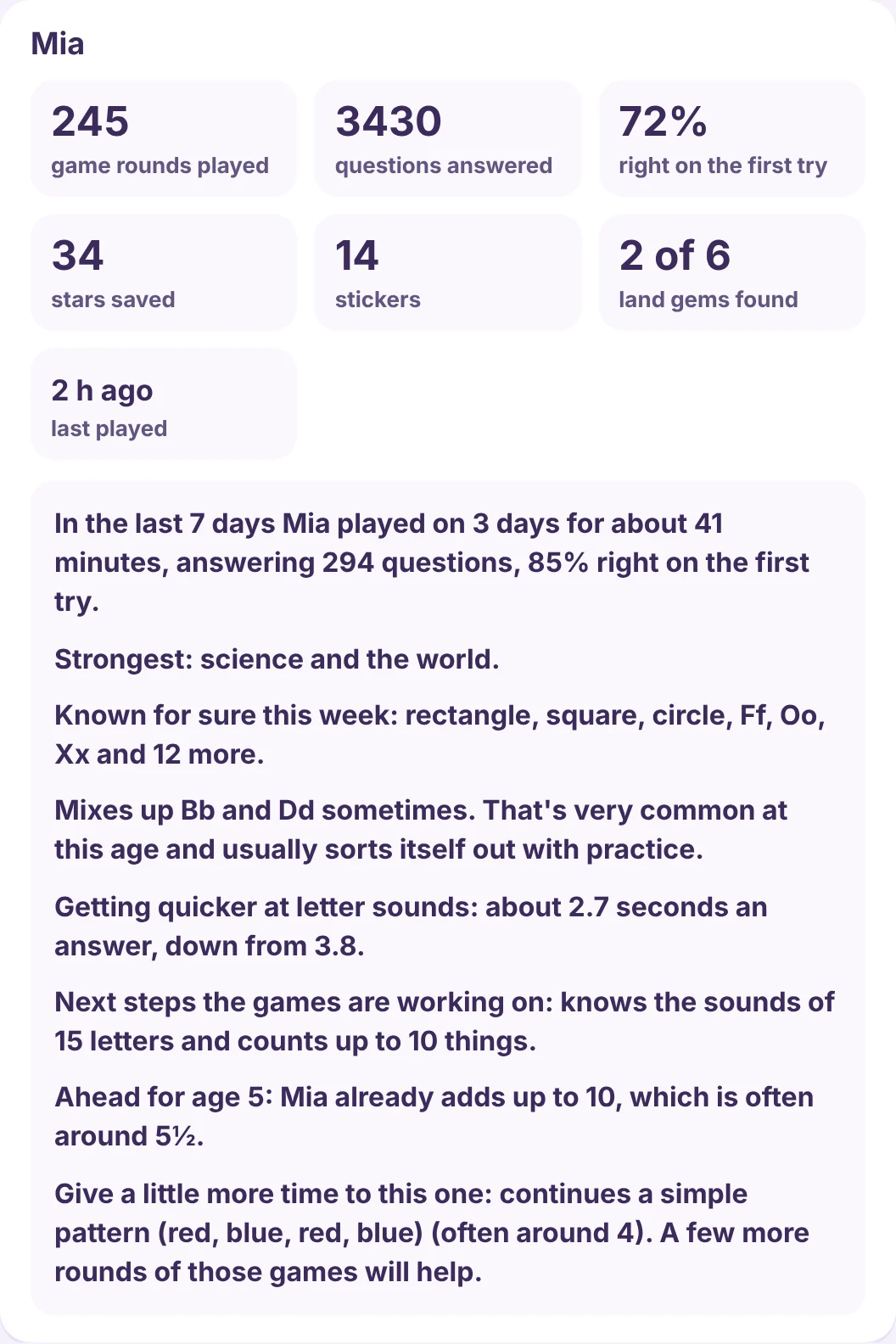
Pictures below are a sample report for a made-up child, Mia, age 5A summary you can read in ten seconds
The top of the report sums up the week the way a teacher would: how often your child played, how many answers were right the first time, what they now know for sure, what they mix up, and what the games are working on next.
- The numbers: game rounds played, questions answered, the share right on the first try, stars, stickers and land gems found
- Trends: this week's first-try score compared with last week's, and which skills your child is getting quicker at
- Strongest areas, the next steps the games are working on, and where your child is ahead for their age
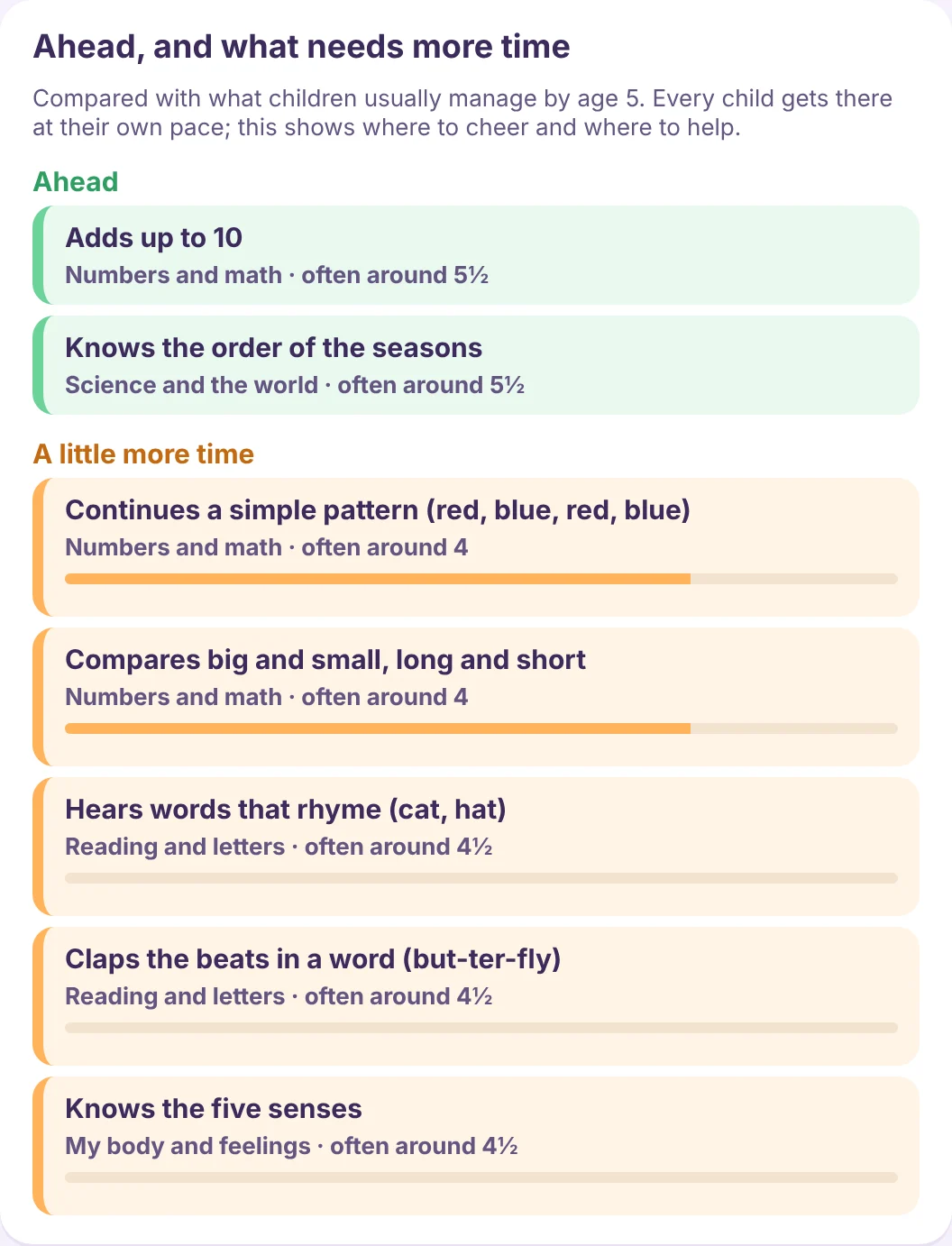
Where your child is ahead, and what needs a little more time
Set your child's age and, after a few days of play, the report gives you a clear answer to the question every parent asks: how is my child doing for their age?
- Ahead: milestones your child has already reached that children usually reach at least half a year later. In the sample, Mia (5) can already add up to 10, which is often around 5½.
- A little more time: milestones usual for their age that aren't there yet, each with a bar showing how close they are, so you know exactly where to help.
- Fair by design: only areas your child has actually played count. Something never tried is listed as "not played yet", never as behind.
Ages are a rough guide, not a deadline. Every child gets there at their own pace, and the report says so.
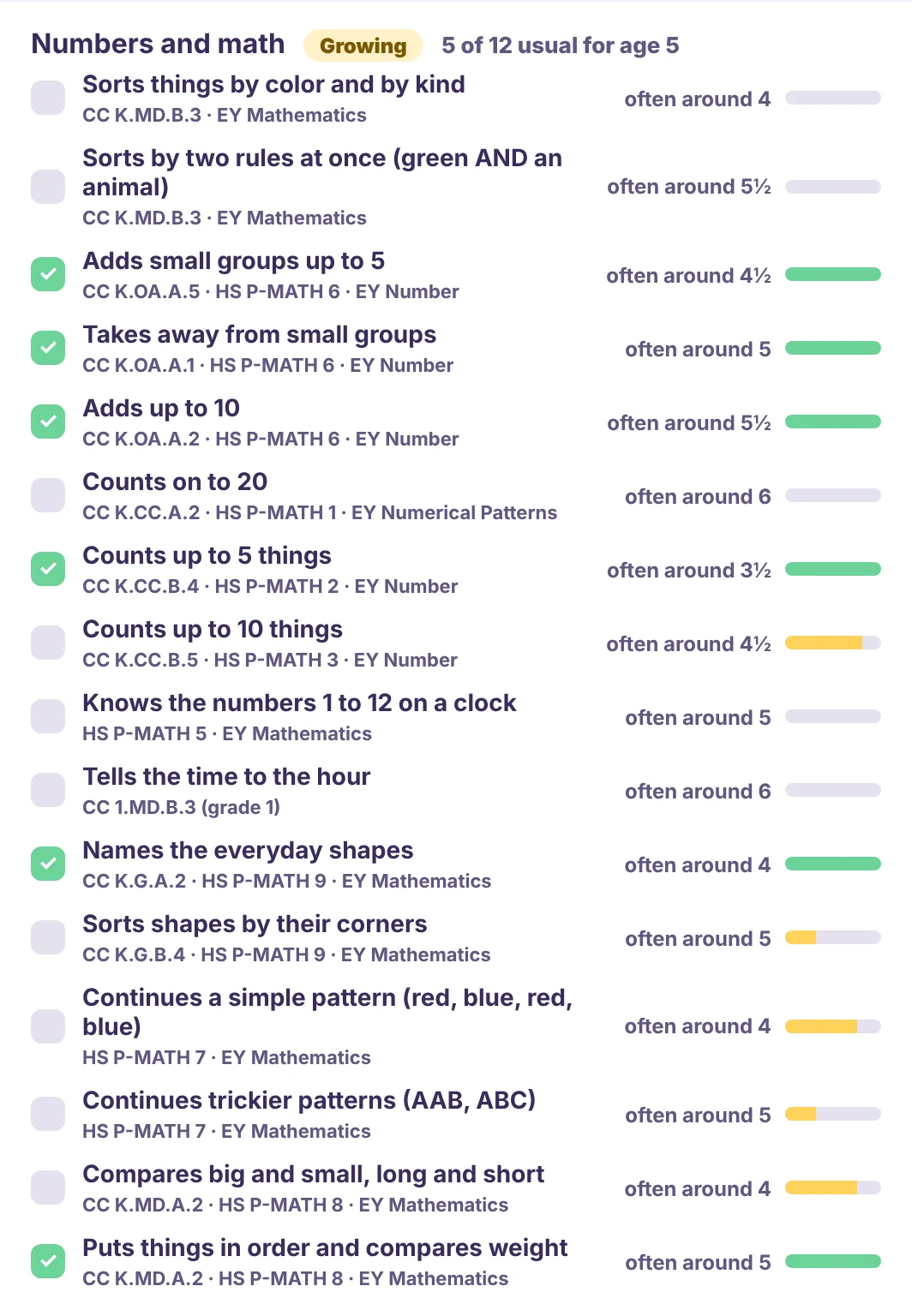
Every milestone, with the age it usually comes
Behind that comparison sits a full milestone list for each learning area, in the order children usually learn them. Each one shows the age many children manage it, how close your child is, and where it fits at school, tagged with the matching kindergarten and preschool standards.
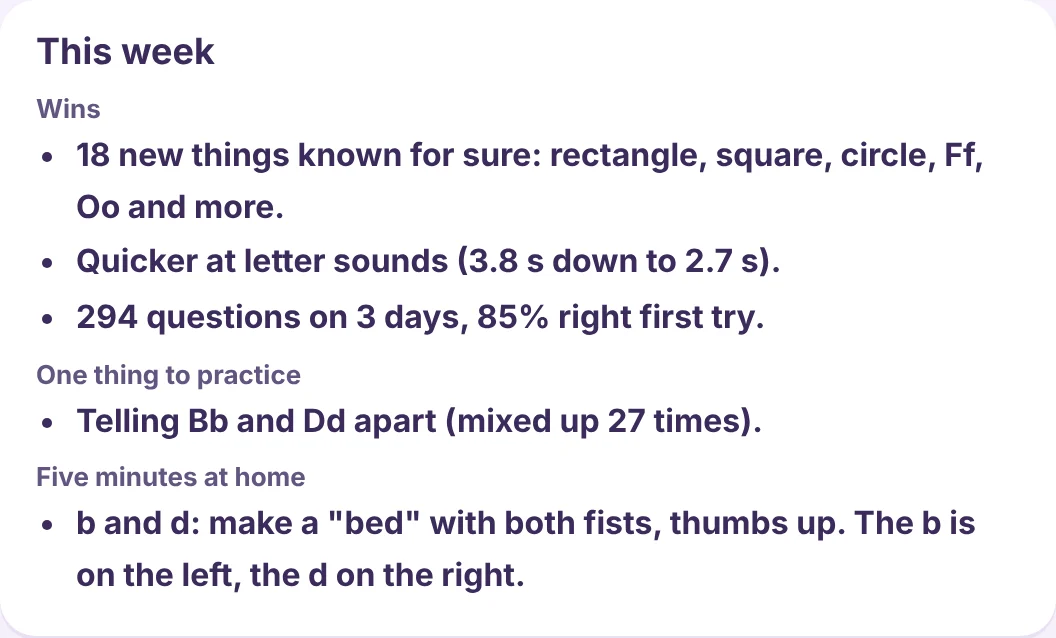
This week: wins, one thing to practice, five minutes at home
Each week the report picks out what went well, the one thing most worth practicing, and a simple activity to try together at home with things you already have. No worksheets, no equipment.
If your child keeps mixing two things up, like b and d, the report says how often, reassures you when it's common at their age, and gives you a trick to try.
Every skill, and how we know
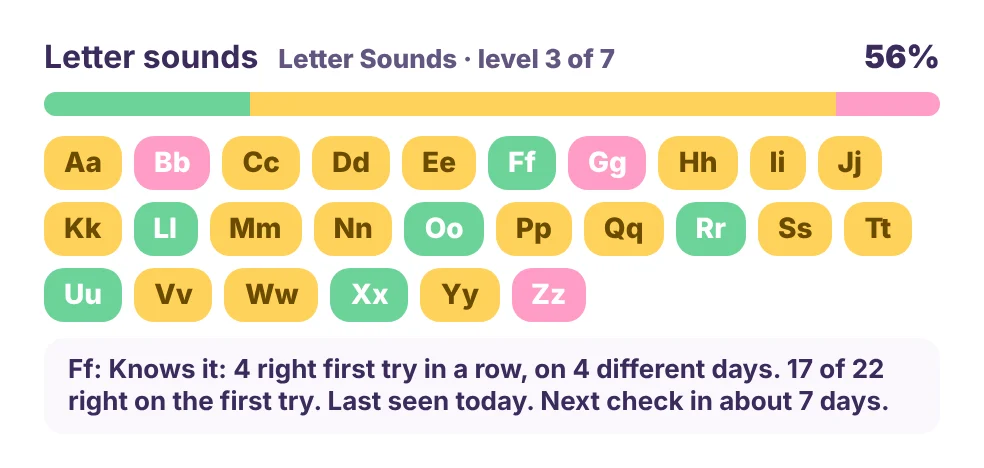
Each skill is broken down item by item: every letter, number, shape and word. Colors show what your child knows, is learning, is practicing, or hasn't met yet. Tap any item and the report explains the evidence behind it, in words.
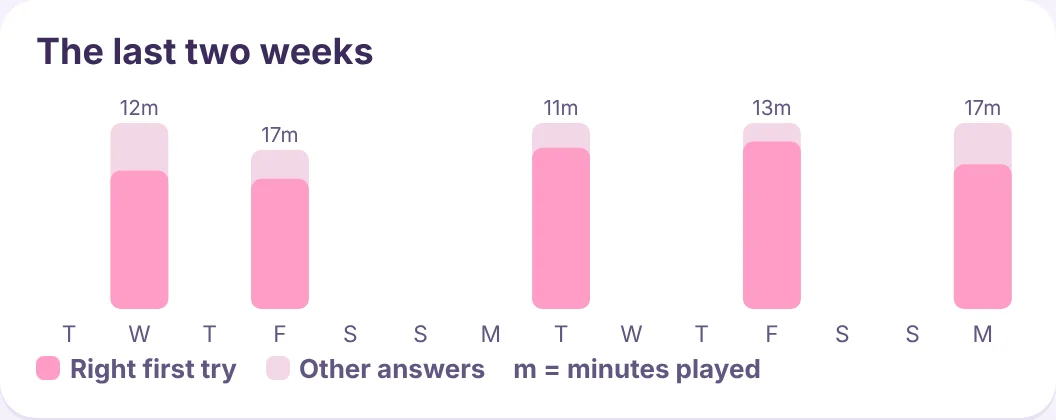
A two-week chart shows how much your child played each day and how many answers were right first time.
More for grown-ups
- A report for each child. Brothers and sisters each get their own player, progress and report.
- Game levels at a glance, with a plain explanation of when a game moves up or down.
- Game helpers switch for the whole family or for one child.
- Keepsake gallery: watch each drawing your child made being drawn again, and save pictures.
- Save progress to a file and restore it on a new device. The file stays with you.
Free to try. One purchase for everything.
No subscriptions, no ads, no coins to buy.
Download the game and play all of Mermaid Lagoon with its learning games and the full Grown-ups report.
One purchase unlocks every land and all future updates. It's behind the grown-ups question, so little fingers can't buy by accident. Restore it on a new device any time.
Read our privacy policy or visit help and support.